
For everyone
You probably do not have PKD. Read this anyway.
Polycystic kidney disease is inherited, and its common adult form is the most common inherited kidney disease there is. It also runs quietly for years. Ten minutes here may be useful to a family you know before it is useful to them.
In short
Cysts grow, and the kidneys have less room to work.
Polycystic kidney disease (PKD) is most often inherited. It causes clusters of fluid-filled sacs, called cysts, to grow mainly in the kidneys. Over time, the cysts can enlarge the kidneys and reduce how well they work. Cysts may also form in the liver and other organs.
Nobody catches PKD and nobody causes it. Diet, lifestyle and personal choices do not bring it on. It comes from a changed gene, almost always inherited from a parent, which is why it appears again and again in the same family.
There is no cure yet. Treatment aims at protecting kidney function, mainly by controlling blood pressure, and at handling the complications along the way.
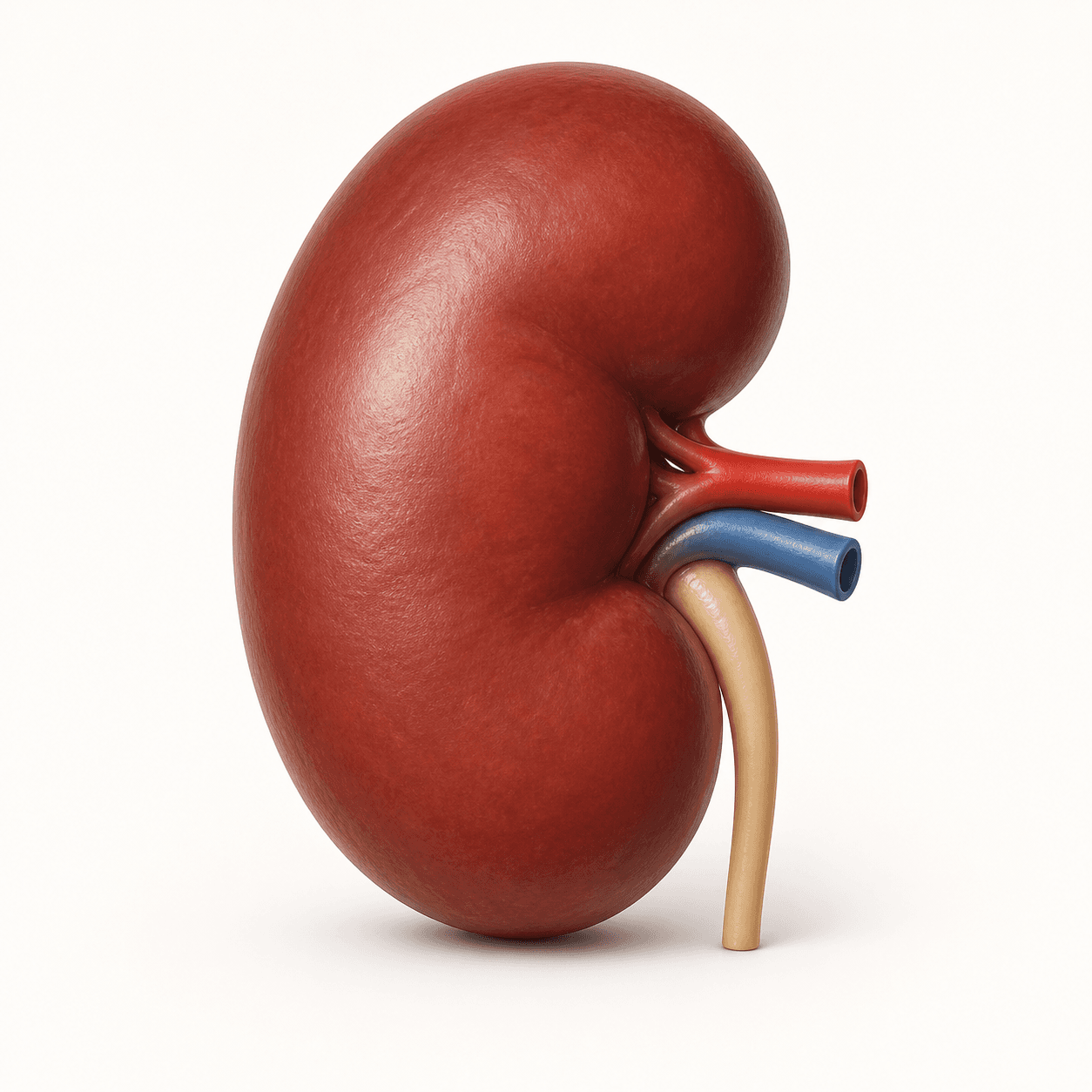
A healthy kidney
Smooth and bean-shaped. A healthy kidney removes waste from the blood and helps keep the body’s chemistry balanced.
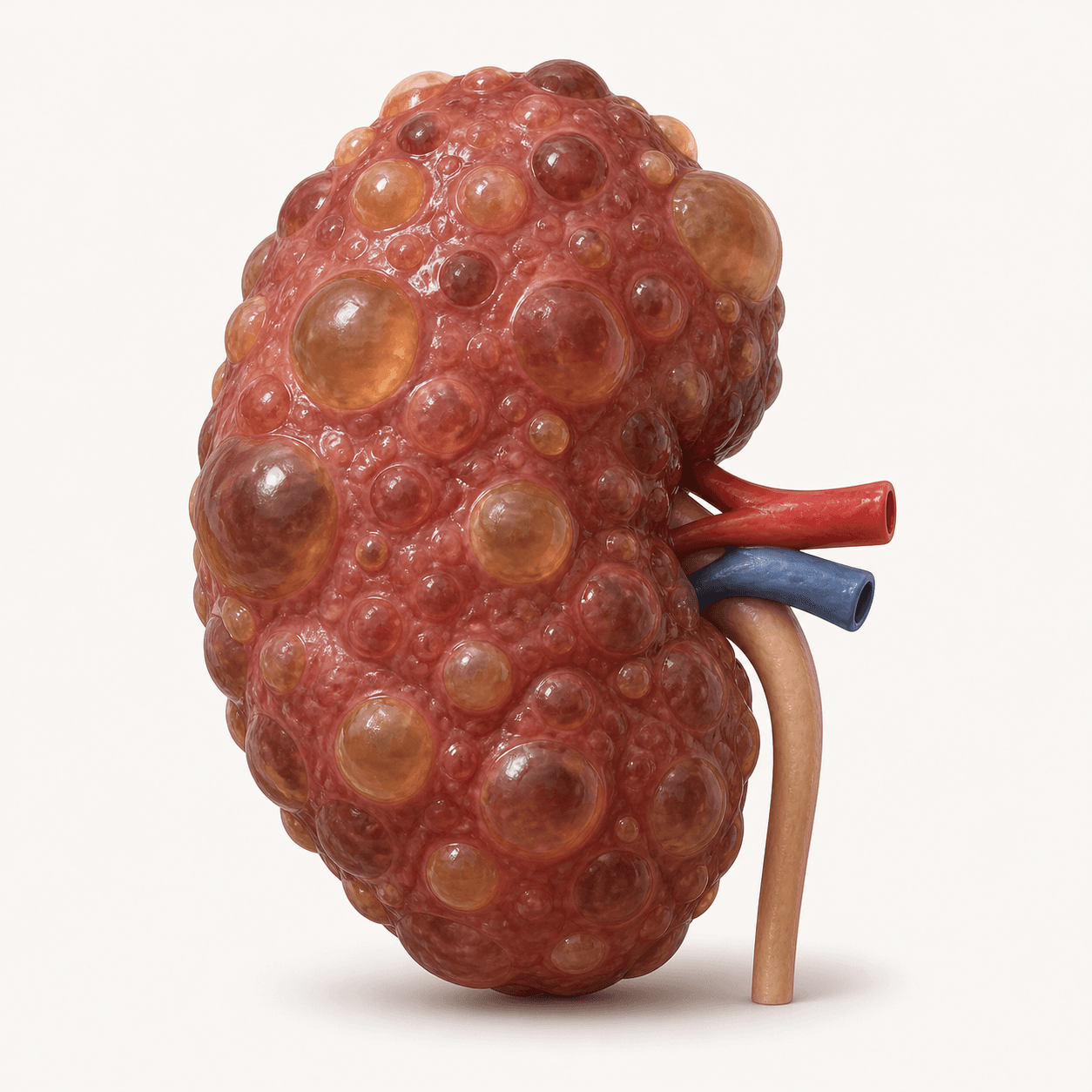
A kidney with PKD
Fluid-filled cysts can enlarge the kidney and gradually reduce how well it works.
Why it stays hidden
Four reasons PKD goes unrecognised for years.
Understanding these is most of what separates someone who is useful to a diagnosed friend from someone who is not.
1
It arrives in adulthood, quietly
Signs of the common adult form often begin between the ages of 30 and 40. Someone can live with it for years without knowing, which is long enough for the whole thing to look like it appeared overnight when it is finally found.
2
The early signs belong to everything else
High blood pressure, back or side pain, headaches, repeated urinary infections. Every one of them has a dozen ordinary explanations, and PKD is rarely the first one anybody reaches for.
3
Families do not always know their own history
When one parent has the dominant form, each child has a 50% chance of inheriting it. That information only helps if somebody in the family says it out loud, and often nobody has.
4
By the time it is loud, it is late
Nearly half of people with the condition have kidney failure by the age of 60, at which point dialysis or a transplant is needed. That is the point at which most people first hear the name.
Where this comes from
This page adapts information from Mayo Clinic, “Polycystic kidney disease”. Hope4PKD has not medically reviewed it. For advice about your own care, speak with a doctor or nurse, and read our medical disclaimer.
Where to go next
Depending on why you came here.
Somebody should know this
The four things worth doing about PKD that need no budget and nobody’s permission, starting with your own family.
Someone in my family has it
What a family history means for relatives, and how to prepare for the appointment where you ask about it.
I am helping someone through it
The practical and emotional load of coordinating another person’s care, and how to make it smaller.
I want to fund the work
How Hope4PKD intends to handle donated money, and why online donations are not open yet.
I want to give time
The roles being defined in community support, content, accessibility and professional services.
Who is behind this
Why Hope4PKD exists, how it is governed, and what it publishes about itself.
The useful thing
Somebody has to be the person who says it is inherited.
Most families with PKD in them find that out one member at a time, years apart. The conversation that shortens that gap is not a medical one, and it does not need a professional to start it.