
Learn about PKD
Polycystic kidney disease in plain language.
Most people meet this condition through a relative, a scan result or a word on a hospital form. This page explains what PKD does and why it runs in families.
What PKD does
As cysts grow, the kidneys work less well.
Polycystic kidney disease (PKD) is most often inherited. It causes clusters of fluid-filled sacs, called cysts, to grow mainly in the kidneys. Over time, the cysts can enlarge the kidneys and reduce how well they work. Cysts may also form in the liver and other organs.
Kidneys remove waste and extra fluid from the blood and help control blood pressure. As cysts take up more space, less healthy kidney tissue can do that work. High blood pressure is common in PKD and can damage the kidneys further if it is not treated.
PKD is lifelong and there is no cure yet. Treatment and lifestyle changes can help protect the kidneys and prevent some complications, especially when high blood pressure is managed.
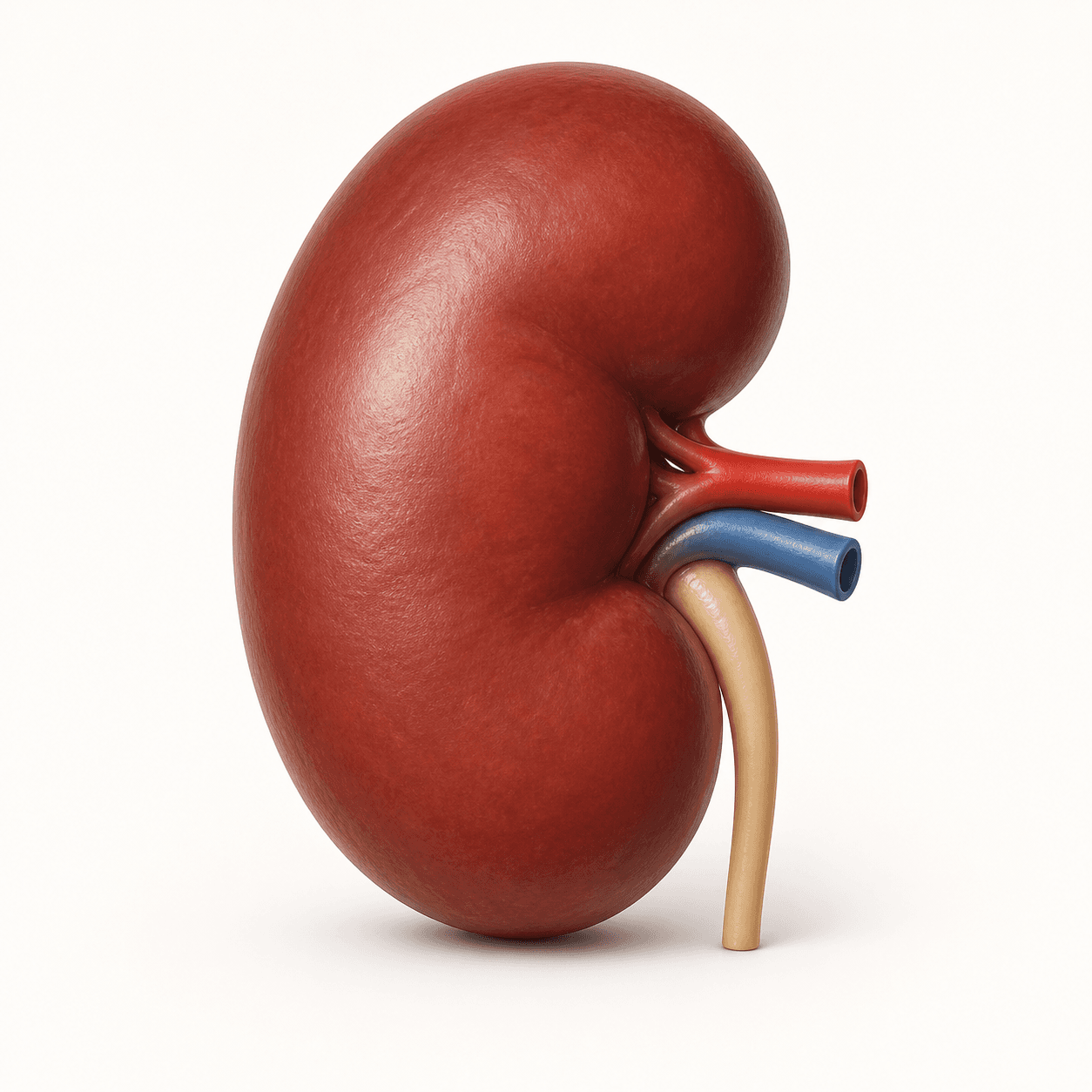
A healthy kidney
Smooth and bean-shaped. A healthy kidney removes waste from the blood and helps keep the body’s chemistry balanced.
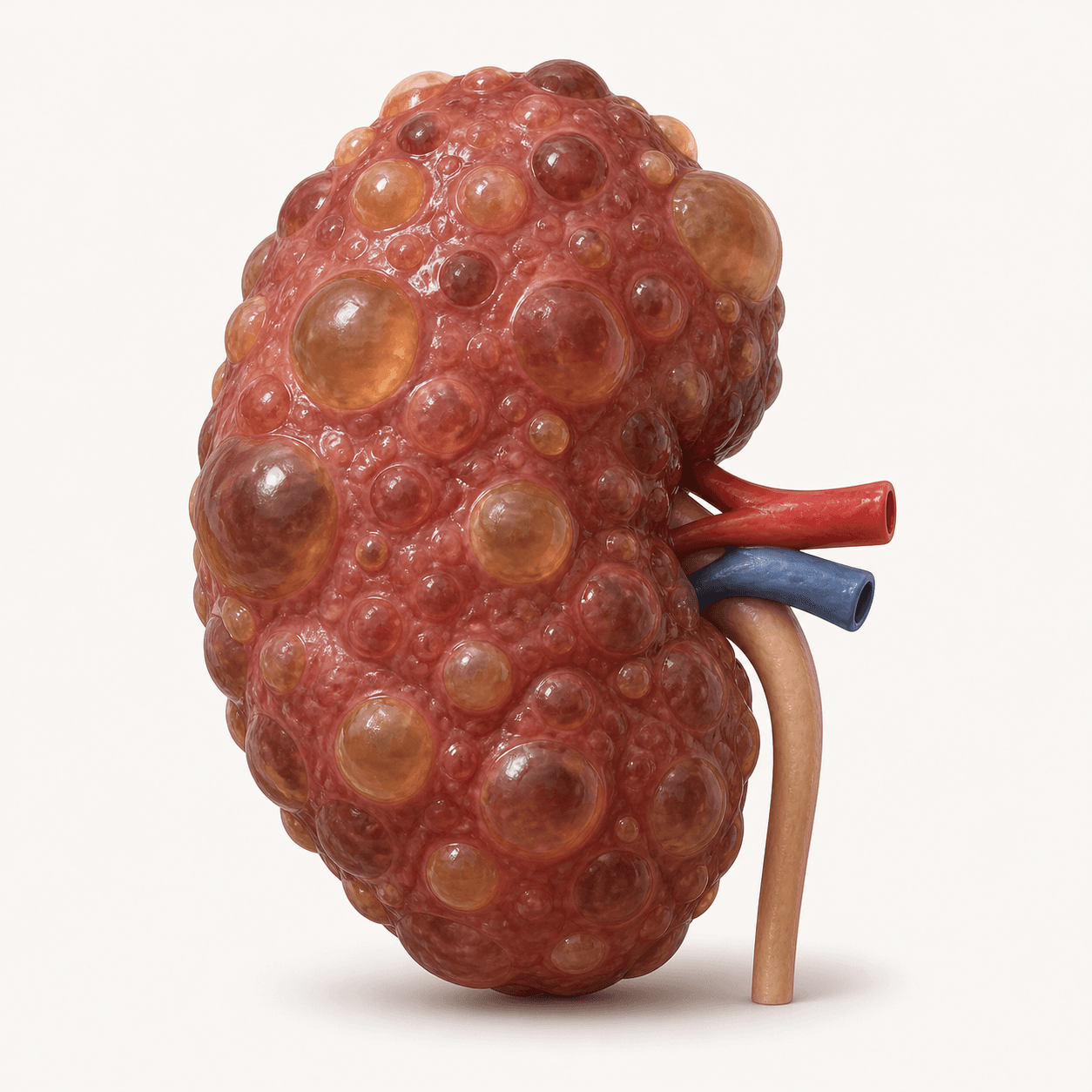
A kidney with PKD
Fluid-filled cysts can enlarge the kidney and gradually reduce how well it works.
Why PKD happens
PKD starts with a changed gene, usually inherited.
Gene changes cause PKD. Most people inherit one from a parent, so the condition can run through several generations of a family. Sometimes the change happens on its own in a child whose parents do not carry it.
Family history is the biggest risk factor. One parent can pass on the dominant form; both parents must carry gene changes for the recessive form. Diet, lifestyle and personal choices do not cause PKD.
Autosomal dominant · ADPKD
The common adult form
ADPKD is the most common inherited kidney disease. Signs often begin between the ages of 30 and 40, so someone may live with it for years without knowing. When one parent has ADPKD, each child has a 50% chance of inheriting it.
Autosomal recessive · ARPKD
The rarer childhood form
ARPKD is far less common than ADPKD and usually more serious. Symptoms can appear shortly after birth, later in childhood or during the teenage years. When both parents carry the changed gene, each child has a 25% chance of inheriting it.
What it means for families
A PKD diagnosis can affect the whole family.
Parents, siblings and children may have inherited the same gene change. Knowing the family history gives them a reason to ask a healthcare professional about screening and blood pressure checks before kidney function declines.
Keep reading
Read about symptoms, diagnosis and care.
Symptoms and diagnosis
Which symptoms PKD can cause, when to speak with a healthcare professional and how scans help diagnose it.
Read symptoms and diagnosisTreatment and care
How care can slow cyst growth, control blood pressure, manage pain and respond when kidney function declines.
Read treatment and careKnowledge Centre
The planned collection will include longer PKD articles with named authors, qualified reviewers, sources and review dates.
Medical review in progress
Where this comes from
This page adapts information from Mayo Clinic, “Polycystic kidney disease”. Hope4PKD has not medically reviewed it. For advice about your own care, speak with a doctor or nurse, and read our medical disclaimer.